
“He’s just getting older.”
“She’s slowing down a bit, but that’s normal, right?”
“He still wants to go, he just doesn’t go as far.”
I hear these sentences constantly from thoughtful owners. Sometimes they are correct—age does change stamina, muscle mass, and recovery time. Sometimes the slowdown is the pet’s way of protecting a sore joint, a tender back, or another source of discomfort that has not yet produced an obvious limp.
The practical difficulty is that the two can look nearly identical from the outside. A dog that once surged ahead on walks now trails behind. A cat that once cleared the windowsill in one leap now takes the longer route through intermediate surfaces. Energy seems lower. Recovery after play takes longer. Without a closer look, it is easy to file the change under “normal aging” and stop examining it.
Why pain and aging overlap so easily
Pain does not always announce itself with crying or non-weight-bearing lameness. Many pets, especially cats and stoic dog breeds, simply reduce the movements that hurt. They shorten the stride, avoid the jump, cut the walk short, or choose the softer resting surface. The result looks like reduced enthusiasm or lower stamina—the same picture many owners expect from an older animal.
Aging itself brings real changes: less lean muscle, stiffer connective tissue, slower recovery. The goal is not to treat every quieter day as a crisis. The goal is to notice when the slowdown is asymmetric, progressive, or accompanied by other clues that suggest the pet is editing its behavior to stay comfortable.
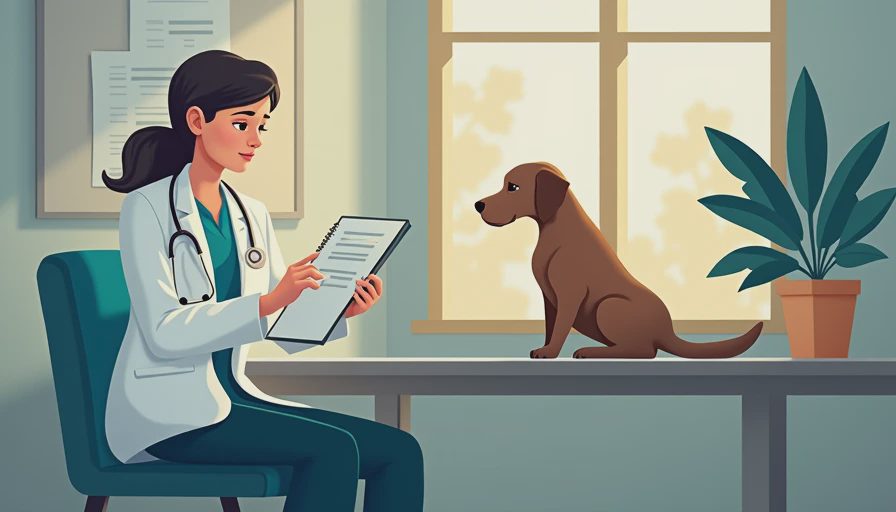
Signs that lean more toward discomfort than simple aging
These are patterns I ask owners to watch for. One isolated observation is rarely decisive. A cluster or a clear progression is information worth recording.
Hesitation on specific movements. Pausing before stairs, jumping into the car, or hopping onto furniture the pet has always used. Once moving, the pet may look relatively fluid; the reluctance shows at the transition.
Asymmetry. Preferring one side when rising, leading with one leg on stairs, or consistently shifting weight away from a particular limb. Aging tends to be more generalized; pain often has a focus.
Shortened or altered gait that improves after warm-up. Stiffness on the first steps out of the door or after rising from a nap, followed by looser movement once the pet is underway. The reverse pattern (worsening as activity continues) also deserves attention.
Change in play style. Less twisting, less rearing up, less explosive starts and stops. The pet still participates but edits out the higher-impact or higher-flexibility movements.
Resting posture shifts. Choosing only soft surfaces, lying in positions that unload a particular area, or taking longer to settle.
Irritability or avoidance with certain handling. Dislike of being touched along the back, hips, or legs; resistance to nail trims or brushing that used to be tolerated.
Reduced height or distance that is not explained by overall fitness. A cat that stops using the top perch; a dog that no longer greets at the window or struggles with a curb it used to clear easily.
A simple home check you can repeat
You do not need special equipment. Once or twice a week, watch these ordinary moments with a little more attention:
Rising from a lying position on a hard floor.
The first 20–30 steps after rising or after getting out of the car.
Stair use in both directions if the household has stairs.
Jumping up and down from a familiar surface (couch, bed, car).
Gait on a non-slip surface at a comfortable walking pace.
Note whether any of these look different from the pet’s prior baseline. Short phone videos taken in good light are often more useful than memory when you later speak with the veterinarian.

How to use the information
If the slowdown is mild, symmetric, stable over weeks, and the pet is otherwise eating well, maintaining weight, and engaging socially, it may be consistent with ordinary aging. Continued gentle observation and routine senior care are reasonable.
If the changes are progressive, asymmetric, paired with any of the discomfort clues above, or accompanied by appetite shifts, thirst changes, or behavior changes, schedule a veterinary examination and bring your notes or videos. The clinician can assess joints, spine, muscle mass, and neurologic function, and decide whether pain management, further diagnostics, or a structured mobility plan is appropriate.
Early pain control and joint support often improve quality of life more than owners expect—precisely because the pet has been quietly compensating rather than advertising the problem.
A practical stance
Slowing down is not automatically “just age,” and it is not automatically a serious disease. It is a change that deserves a second look rather than an automatic label. The pets who benefit most from that second look are the ones still trying to keep up by editing their movements instead of complaining.
You do not have to assume every quieter walk is a crisis. You do need to notice when the slowdown has a pattern—hesitation at specific movements, asymmetry, progressive reduction in height or distance—that suggests the pet is protecting itself. That distinction is one of the most useful early signals you can offer your veterinarian, and one of the kindest forms of attention you can offer your pet.
In later posts I’ll share a short home mobility checklist and ways to track good days versus harder days so the trend stays visible over months. For now, watch the ordinary transitions: rising, starting to move, climbing, jumping. The quiet edits a pet makes in those moments are often the earliest usable information.



No notes yet — write the first one.