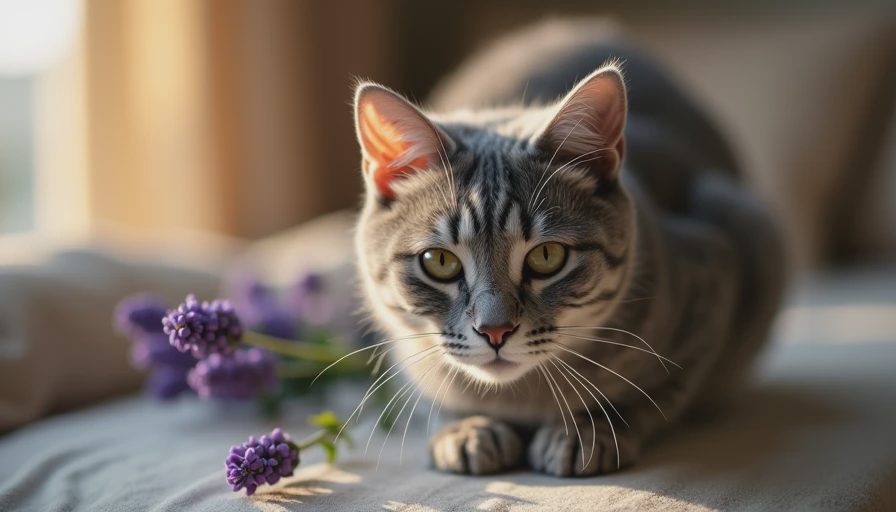
If you have a lavender plant on the windowsill, a sachet in a drawer, or an essential oil diffuser running in the living room, you may wonder: is lavender safe for cats? The short answer depends on the form, amount, and your cat’s exposure. A small brush against an outdoor plant is not the same as licking concentrated lavender oil. You don’t have to panic — but you do need to notice what your cat encountered and how your cat is acting afterward.
The quick answer about lavender and cats
Fresh lavender is generally considered irritating or potentially toxic if a cat eats enough of it, while lavender essential oil is a much more concentrated concern. Cats can absorb some substances through their skin and respiratory tract, then ingest residue while grooming. Their liver also handles many compounds differently from a human liver, so a product that seems mild to you can be unsafe for a cat.
A single sniff near a lavender plant usually does not create an emergency. However, chewing leaves, licking oil from fur, walking through a spill, or spending hours in a heavily scented room deserves more attention. The product label matters too. A “lavender” household spray might contain alcohol, solvents, other essential oils, or cleaning ingredients that create separate risks.
If you are asking is lavender safe for cats because your pet has already been exposed, move the cat away from the source first. Do not apply home remedies, induce vomiting, or give milk unless a veterinary professional specifically tells you to do so.

Lavender plants, dried flowers, and household products
A living lavender plant is less concentrated than essential oil, but that does not make it a cat-safe snack. Some cats ignore plants completely; others chew leaves, flowers, and stems when they are bored or curious. Eating plant material can cause drooling, nausea, vomiting, diarrhea, or mouth irritation. The actual risk also changes if the plant was treated with fertilizer, pesticide, or insecticide.
Dried lavender in a pillow sachet or craft decoration can still be chewed and swallowed. Keep sachets closed and place them in areas your cat cannot reach. Never assume that a natural label means harmless. Natural compounds can still irritate the mouth, stomach, lungs, or nervous system.
Room sprays, candles, plug-ins, and laundry products deserve their own review. A cat may not eat these items, but residue can settle on fur or paws. If your cat grooms after contact, the exposure becomes an ingestion problem. When considering is lavender safe for cats, think beyond the flower itself and inspect everything that carries the fragrance.
Why lavender essential oil needs extra caution
Essential oils are concentrated plant extracts. Just a few drops may represent a large amount of plant material, and cats can be exposed by licking a spill, getting oil on their coat, or inhaling vapor in a poorly ventilated room. Some cats with asthma or other respiratory disease can be especially sensitive to strong fragrances.
Do not put lavender oil directly on a cat’s skin, paws, collar, bedding, or fur. Avoid using it to treat fleas, anxiety, wounds, or odors. Diffusers are not automatically safe because the oil is airborne. Active diffusers can release tiny droplets that land on surfaces and may be inhaled or groomed from the coat. Passive reed diffusers and oil warmers can also spill or release irritating fumes.
If a diffuser is used in a cat household, the safest approach is to avoid it, especially in small rooms. If someone uses one briefly, keep the cat out of the area, provide ventilation, and remove the diffuser before the cat returns. This is why is lavender safe for cats cannot be answered with a simple yes or no when essential oil is involved.
Signs your cat may be reacting
Watch for drooling, repeated lip licking, pawing at the mouth, vomiting, diarrhea, coughing, sneezing, watery eyes, or unusual hiding. Affected cats may seem tired, wobbly, weak, or less interested in food. Tremors, difficulty breathing, collapse, or seizures are urgent warning signs.
The timing can help your veterinarian understand the event, but do not wait for symptoms if your cat swallowed essential oil or had oil on the skin. Call your veterinarian, an emergency clinic, or a pet poison service for immediate guidance. Have the product container or a photograph of the ingredient list available. Tell them your cat’s approximate weight, the amount involved, when it happened, and whether the product touched the mouth, skin, or eyes.
If oil got on the coat, stop your cat from grooming if you can do so safely and call for instructions about cleaning. Some products require careful bathing, while rubbing the substance further into the fur can worsen contact.
What to do after a possible exposure
Start by identifying the source. Was it a plant, dried sachet, diffuser, spray, candle, or pure oil? Check whether the bottle lists other ingredients, because the full formula affects the advice. Take a quick photo of the label and note how long your cat was near it.
Next, remove access without creating another hazard. Pick up spilled material while wearing gloves, close the room door, and move the cat to fresh air if fumes are present. Do not make your cat vomit. Cats can inhale oily material into the lungs during vomiting, which can create a serious complication. Do not use human medications or random household cleaners on the coat.
Even if your cat looks normal, call for professional guidance after a known essential-oil exposure. Early advice is useful because symptoms can be subtle at first. If your veterinarian says home monitoring is appropriate, keep your cat in a quiet room and watch breathing, walking, appetite, vomiting, and litter box use.
Making a cat-friendly home fragrance plan
The simplest answer to is lavender safe for cats is to keep concentrated lavender products out of the cat’s environment. Choose unscented laundry detergent for bedding, skip essential-oil flea remedies, and store oils in a closed cabinet rather than on a bathroom counter. Use cat-safe plants such as spider plants or cat grass only after confirming the exact species and avoiding treated plants.
If you enjoy lavender outdoors, grow it in a secured area your cat cannot reach. Remove fallen stems and prevent access to garden products. For indoor odor control, focus on the source: scoop the litter box regularly, wash washable bedding, improve ventilation, and use a properly maintained air purifier without added fragrance.
Questions to bring to your veterinarian
A clear question is more useful than a guess based on a social media post. Ask, “My cat was exposed to this exact product; what should I do now?” You can also ask whether the cat needs an exam, whether bathing is appropriate, and which symptoms require an emergency visit. Bring the packaging and a timeline of events.
Cats often hide discomfort, so a normal-looking face does not prove that nothing happened. Pay attention to the pattern: changes in breathing, balance, grooming, appetite, energy, or bathroom habits matter. When in doubt about is lavender safe for cats, choose prevention and professional advice over an internet remedy. You don’t have to panic — but you do need to notice.




No notes yet — write the first one.