Pumpkin for canines often appears in conversations about loose stool, constipation, or a dog with a sensitive stomach. It is easy to understand why: plain pumpkin is affordable, widely available, and contains fiber and moisture. But it is not a universal stomach cure, and the wrong product or portion can make a digestive problem harder to interpret. Here is how to use it thoughtfully while paying attention to the bigger health picture.
Why pumpkin may help digestion
The useful part of pumpkin is primarily its fiber and water content. Fiber can add bulk to stool, while some types of fiber help hold water in the intestinal tract. That combination may support more normal bowel movements in a dog with a mild, short-lived change in stool. Pumpkin for canines is sometimes suggested when a dog has soft stool after a minor diet disruption, such as getting into a few extra treats.
The body may respond differently depending on the original problem. A dog with mild loose stool might benefit from a small amount of soluble fiber, while a dog that is already constipated could need hydration, exercise, a diet adjustment, or veterinary treatment instead. Pumpkin does not remove a foreign object, treat parasites, cure pancreatitis, or replace prescribed medication. It is a supportive food, not a diagnosis.
Choose plain canned pumpkin or cooked pumpkin with no added ingredients. Do not confuse it with pumpkin pie filling, which can contain sugar, spices, and other additives. Pumpkin spice products are especially inappropriate because some recipes include ingredients that are unsafe for dogs, such as concentrated spices or xylitol in certain sugar-free foods.
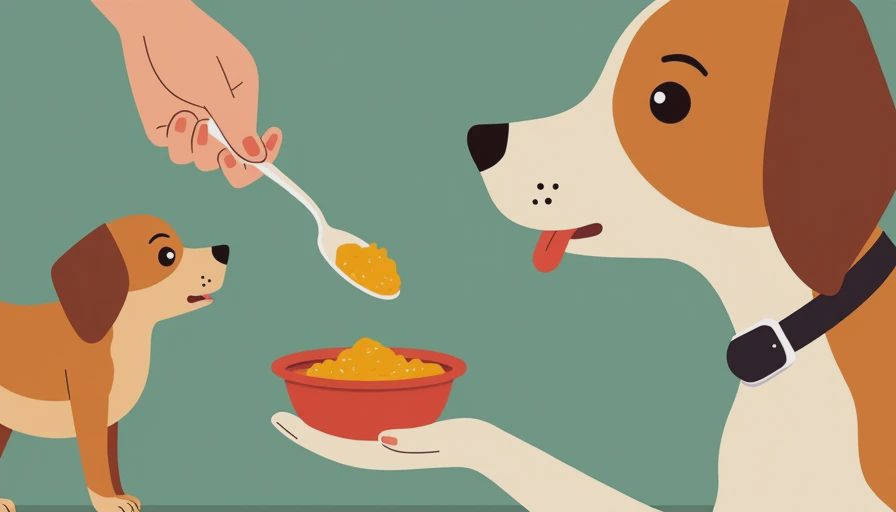
How much pumpkin should a dog get?
When trying pumpkin for canines, start with a small portion rather than filling the food bowl with it. A tiny dog may begin with about one teaspoon mixed into food. A medium-size dog might start with one to two teaspoons, while a large dog may begin with one tablespoon. These are starting points, not a prescription, and a veterinarian can give more precise guidance for a dog with diabetes, obesity, chronic bowel disease, or a prescription diet.
Introduce the food once and watch the response for the next day. Too much fiber can cause gas, abdominal discomfort, softer stool, or a dog that eats less of the nutritionally complete diet it actually needs. Pumpkin for canines should remain a small addition, not a major part of daily calories. If stool is improving, there is no advantage to continually increasing the amount.
Keep the can refrigerated after opening and use a clean spoon. You can mix a measured portion into regular food, freeze small dots for an occasional treat, or add it to a bland meal only when your veterinary team has recommended that feeding plan. Always provide fresh water, especially if diarrhea is present.
What pumpkin can and cannot tell you
A change after pumpkin is information, but it is not proof that the underlying issue has been solved. For example, a dog may pass a firmer stool because fiber changed its consistency while a parasite, food intolerance, or inflammatory condition remains. Pumpkin for canines can make an observation easier, but it should not erase the need to notice appetite, energy, water intake, and bathroom frequency.
Track the pattern in your phone or notebook. Write down when the stool changed, what it looked like, how often your dog went outside, what foods or treats were given, and whether vomiting occurred. Note mucus, fresh red blood, black or tarry stool, straining, pain, or unusual urgency. A simple timeline gives your veterinarian more useful information than saying, “The stomach has been off for a while.”
Do not jump to the worst-case scenario after one soft stool. Start with the pattern. A bright, comfortable dog that has one mild change may be appropriate for close observation, while repeated symptoms deserve a different response.

When pumpkin is the wrong next step
Pumpkin for canines is not the right home experiment when a dog has repeated vomiting, severe or worsening diarrhea, a painful or swollen abdomen, collapse, marked weakness, trouble breathing, or signs of dehydration. Puppies, senior dogs, very small dogs, and pets with chronic medical conditions can become unwell more quickly. Call a veterinary clinic promptly if your dog cannot keep water down or if you see blood or black stool.
Urgency also matters when there is a possible toxin or foreign object. A missing sock, chewed toy, corn cob, medication, or package of sugar-free candy is not a situation to manage with extra fiber. Do not induce vomiting unless a veterinarian or poison-control professional specifically directs you. Adding food can complicate an evaluation and does not push an obstruction safely through the intestine.
If diarrhea continues beyond a brief period, returns frequently, or comes with weight loss, poor appetite, or nighttime bathroom accidents, schedule an appointment. Your veterinarian may recommend a fecal test, blood work, abdominal imaging, or a diet trial based on the history and examination.
Picking a safer product and feeding routine
Read the ingredient label before buying. The product should say plain pumpkin or contain only pumpkin. Canned pumpkin is convenient, but cooked fresh pumpkin can work if it is unseasoned, cooled, and free from the stem, rind, and hard seeds. Never offer pumpkin pie, pumpkin bread, flavored latte ingredients, or leftovers containing onion, garlic, heavy fat, or artificial sweeteners.
For dogs already eating a therapeutic diet from brands such as Hill’s Prescription Diet, Royal Canin Veterinary Diet, or Purina Pro Plan Veterinary Diets, ask the prescribing clinic before adding pumpkin for canines. Even a healthy food can interfere with a carefully calculated nutrition plan or make a food trial less reliable. The same caution applies to dogs taking medication for diabetes, intestinal disease, or weight management.
Offer the smallest amount likely to be useful, then reassess instead of automatically repeating it at every meal. If your dog needs a lasting fiber adjustment, a veterinary nutrition plan may be safer and more balanced than improvising with kitchen ingredients.
Questions to take to your veterinarian
Bring the product label, the approximate amount offered, and a short symptom timeline. Ask whether the stool change sounds appropriate for home monitoring, whether a fecal test is needed, and what signs would require an urgent visit. You can also ask how pumpkin for canines fits with your dog’s current calories, medications, and medical history.
You do not have to panic — but you do need to notice. Plain pumpkin can be a reasonable short-term dietary tool for some dogs, especially when used in a measured portion and paired with observation. It should never become a reason to postpone care when symptoms are persistent, painful, or accompanied by behavior changes. The goal is not simply firmer stool; it is understanding what your dog’s body may be trying to tell you and responding before a small concern becomes a bigger one.



No notes yet — write the first one.