
Weight loss in an older cat is one of the changes owners are most likely to notice late. Fur hides a lot. A cat that still looks “fluffy” can lose a significant percentage of body weight before the difference becomes obvious from across the room. By the time the spine and hip bones feel sharp under the hands, the process has often been underway for weeks or months.
I keep a short, practical checklist for the senior cats in my care and for the ones I help owners monitor. It is not a diagnostic tool. It is a way to catch directional change earlier so that a veterinary conversation can happen while there is still more room to intervene.
Why weight trends matter so much in senior cats
Older cats lose weight for many reasons: chronic kidney disease, hyperthyroidism, dental pain, diabetes, inflammatory bowel disease, neoplasia, and simple reductions in muscle mass with age. Some of these conditions are highly manageable when found early; others require prompt staging and support. In almost every case, documented weight loss is useful information. A number on a scale plus a hands-on body-condition note is more actionable than a vague sense that the cat “looks a little thinner.”
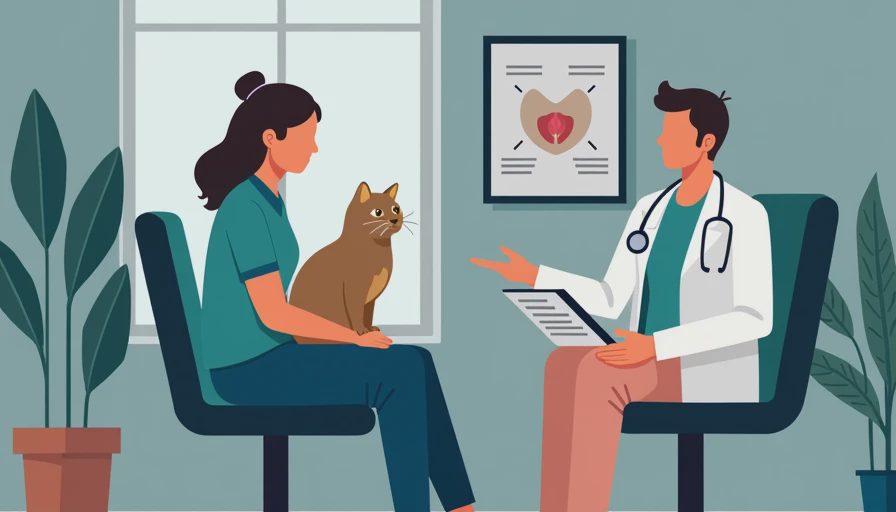
The home checklist I actually use
These steps are deliberately low-tech and repeatable. Consistency beats complexity.
1. Weigh on a fixed schedule
Use the same scale each time (a baby scale or a pet scale works; some owners weigh themselves holding the cat and subtract). Aim for once every 1–2 weeks for cats already under monitoring, or at least monthly for apparently stable seniors. Record the number and the date. A trend of even 5–10 % loss over weeks to months is worth noting.
2. Hands-on body-condition check
Once a week, run your hands along the ribs, spine, and hip bones. In a cat of ideal condition you should feel the ribs easily with a light covering of fat; the waist should be visible from above; the abdominal tuck should be present without extreme thinness. Note whether the bones feel more prominent than the previous week or whether muscle over the back and hindquarters is diminishing. Fur can disguise visual loss; touch is harder to fool.
3. Appetite and eating mechanics
Is the cat finishing meals? Approaching the bowl and walking away? Preferring only soft food or only certain flavors? Dropping kibble or chewing on one side? Any of these can precede or accompany measurable weight loss, especially when dental disease or nausea is present.
4. Thirst and urine output
Increased drinking and larger litter-box clumps often travel with weight loss in kidney disease and diabetes. A relative change (bowl emptying faster, clumps consistently larger) is more useful than an absolute measurement.
5. Muscle versus fat
Try to distinguish loss of fat from loss of muscle. Muscle wasting along the spine, shoulders, and thighs can occur even when a small fat pad remains on the belly. This distinction helps the veterinarian interpret the physical exam and laboratory findings.
6. Energy and behavior baseline
A quieter cat, longer rest periods, or reduced interest in play and exploration can accompany metabolic or painful conditions that also cause weight loss. Note whether the change is stable or progressive.
7. Coat and grooming
A duller, greasier, or more matted coat—especially along the back and hind end—often appears when a cat feels mildly unwell or has reduced flexibility. It is a supporting clue rather than a primary one.
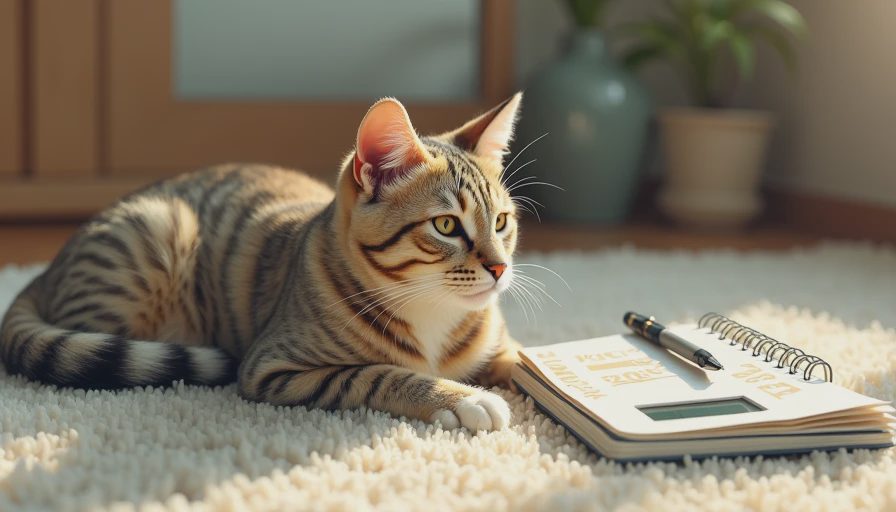
How to record it without turning your life into a spreadsheet
A simple note in your phone is enough:
“Mar 12 – 4.1 kg (down 0.2 from Feb 20). Ribs more easily felt. Finished ~70 % of meals last 5 days. Water bowl emptying faster. Coat a bit greasier along back.”
Bring the trend to the appointment. “She’s lost 8 % of her body weight over ten weeks and her appetite has become selective” is far more useful than “I think she’s losing weight.”
When to call rather than simply continue tracking
Contact the clinic if:
Weight loss exceeds roughly 5–10 % in a month or continues steadily over several checks
Appetite drops sharply or the cat begins refusing food
Vomiting, marked lethargy, or difficulty breathing appears
Thirst and urination increase dramatically
You simply feel the trend is accelerating
Early evaluation often includes a physical exam, dental assessment, bloodwork, urinalysis, and sometimes blood pressure or additional imaging. The home data help the veterinarian decide urgency and which tests are most informative.
What this checklist is not
It is not a substitute for regular senior wellness visits and laboratory screening. Some of the most common conditions that cause weight loss in older cats are first detected on bloodwork while the cat still looks relatively normal at home. The checklist fills the intervals between those visits and sharpens the history you can provide.
It is also not a reason for constant anxiety. Many senior cats have slow, mild fluctuations. The purpose of tracking is to distinguish ordinary variation from a directional trend that deserves professional eyes.
A practical bottom line
Weight loss in older cats is common, often gradual, and frequently missed until it is pronounced. A scale, a weekly hands-on check, and brief notes on appetite and thirst give you the best chance of noticing it while the numbers are still small. That earlier notice is one of the most useful things an owner can offer a senior cat.
You do not have to weigh every day or panic over a single lower number. You do need a repeatable way to see the direction of change. Once the direction is clear, the next step is a conversation with your veterinarian—supported by the simple records you have kept at home.
In later posts I’ll share methods for logging good days versus harder days and for tracking mobility changes that often appear alongside metabolic shifts in senior pets. For now, start with the scale and your hands. Those two tools, used consistently, catch more early weight loss than almost any other home observation.



No notes yet — write the first one.