
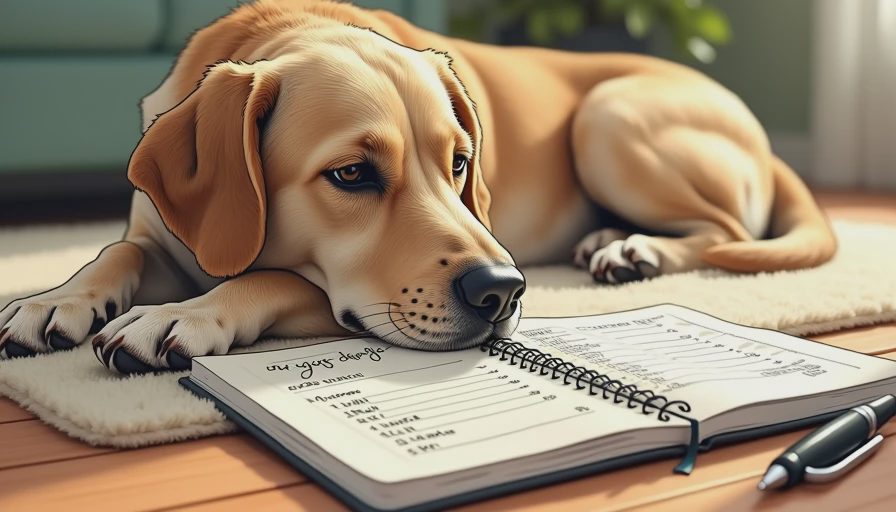
My older dog is not dramatic. He still greets me at the door, still steals the sunny spot on the rug, and still looks offended when dinner is thirty seconds late. From a distance he appears fine. Up close, and with the habit of paying attention, small shifts appear that I have learned not to dismiss as “just age.”
That distinction—between normal aging and a change worth noting—is one of the most useful skills an owner of a senior pet can develop. I track a short list of daily and weekly observations in my own household for exactly this reason. None of them require special equipment. All of them help me decide when something has moved from background variation into a pattern that deserves a conversation with the veterinarian.
Why I bother with the quiet details
Senior dogs and cats are masters of compensation. A stiff joint gets managed by shorter strides. A subtle drop in appetite gets masked by enthusiasm for high-value treats. Mildly increased thirst can look like ordinary habit until you notice the water bowl is emptying faster than it used to. By the time the signs become obvious—clear limping, outright refusal to eat, dramatic weight loss—the underlying process has often been underway for weeks or months.
I do not treat every small change as an emergency. I do treat repeated or progressive changes as information. The goal is earlier context for the veterinarian, not self-diagnosis.

The short list I actually use
These are the observations I pay attention to with my senior dog. They are practical, repeatable, and easy to note in a phone or notebook.
1. Mobility and posture on ordinary surfaces
How he rises from a lie-down. Whether the first few steps after rest are stiff or smooth. Willingness to use stairs, jump into the car, or hop onto the couch he has always used. Any shift in weight toward the front or rear, or a new preference for softer flooring. I watch these on normal days, not only after long walks.
2. Appetite rhythm, not just “ate or didn’t”
Does he finish meals at the usual speed? Is he leaving kibble but still eager for toppers or treats? Any new hesitation at the bowl, dropping food, or chewing on one side? A single skipped meal is less informative than a pattern of slower or more selective eating over several days.
3. Thirst and urination patterns
How often the water bowl needs refilling relative to the same weather and activity level. Any increase in nighttime trips outside or new accidents. These matter because changes in drinking and urinating can appear before other signs of kidney or endocrine shifts.
4. Body condition by touch
Once a week I run my hands over his ribs, waist, and the muscles along his spine and hindquarters. I am looking for gradual loss of muscle or fat that the eye might miss under fur, or for new fullness that suggests weight gain. Scale weight helps, but hands often catch distribution changes first.
5. Energy distribution across the day
Not just “tired” or “active.” Is the morning walk still consistent while the evening one has shortened? Does he recover from play or a longer outing the same way he used to? A new pattern of longer rest periods after ordinary activity is worth noting.
6. Social and comfort behaviors
Greeting intensity, interest in household routines, restlessness at night, or new reluctance to be touched in certain areas. Senior pets can become more irritable or more clingy when something hurts or feels off. These shifts are easy to attribute to “mood” until they persist.
7. Breath, mouth, and coat
Changes in breath odor, increased tartar visibility, reluctance to chew harder items, or a coat that looks duller or sheds differently. Dental and systemic issues often travel together in older dogs; the mouth is one of the places early clues appear.
I do not score these daily with elaborate charts. I simply notice whether any item has moved from its usual baseline and whether the change is holding or progressing.
How I decide when to call
A single off day rarely prompts a visit. A cluster of changes, a clear progression over one to two weeks, or any change paired with vomiting, diarrhea, coughing, labored breathing, or obvious pain does. I also schedule routine senior exams and lab work on the timeline my veterinarian recommends, because some of the most useful information (kidney values, thyroid, early organ shifts) does not show up in behavior until later.
When I do call or bring him in, I arrive with the short pattern: “Over the past ten days he has been slower to rise, leaving more of his morning meal, and the water bowl is emptying roughly a third faster. Weight is stable on the scale but I feel less muscle over his hindquarters.” That is far more useful than “he seems older.”
What this is not
This is not a demand that every owner become hyper-vigilant or anxious. It is a low-effort habit of attention that replaces vague worry with specific observations. It also protects against the opposite mistake—assuming every slowdown is inevitable and therefore not worth checking.
My senior dog still has good days and less-good days. The tracking simply helps me tell the difference between the ordinary variation of an older body and a trend that deserves professional eyes sooner rather than later.
You don’t have to panic over every stiff morning or slightly pickier meal. You do need to notice when the quiet changes start to form a pattern. That is the daily work of caring for a senior pet at home, and it is one of the most practical ways to support them while they are still mostly themselves.
In upcoming posts I’ll share a simple home mobility check and a straightforward way to log good days versus harder days so the information stays useful over months rather than weeks. For now, start with the short list that fits your own dog or cat. Consistency matters more than complexity.



No notes yet — write the first one.